Field Trip II: ART & AIRSPACE

A Grounding in History and the Airspace of Today
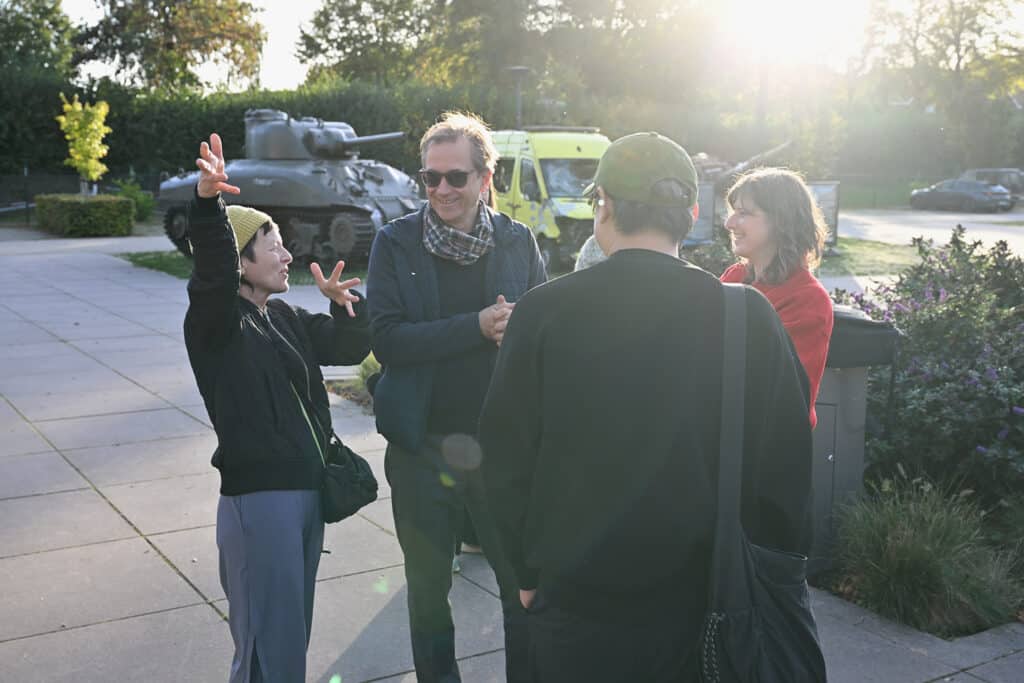
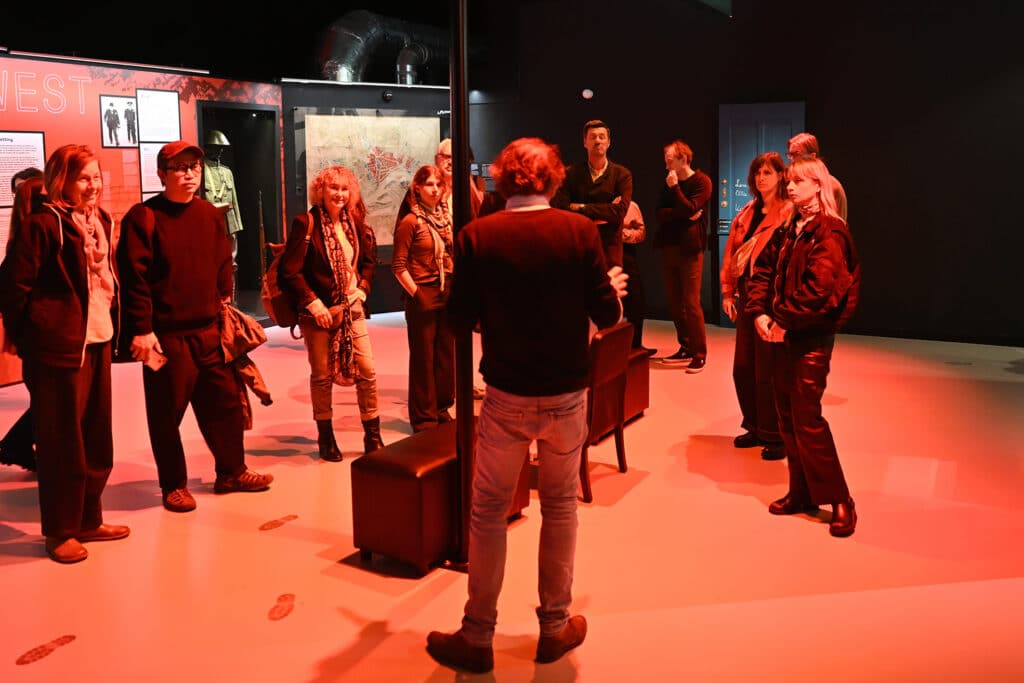
On October 14, 2026, our two-day field trip Art and Airspace began at the Vrijheidsmuseum in Groesbeek. Originally founded in the 1980s, the museum was completely rebuilt and reopened in September 2019 under a new name and modern concept. Beyond presenting the history of the Second World War, the museum explores its causes, aftermath, and direct links to pressing contemporary questions of freedom. It features an impressive array of exhibits alongside an explicit educational mission designed to engage younger generations. Interactive stations confront visitors with dilemmas of conscience and simulate the sensory reality of air raids, while historical displays highlight both the power of National Socialist propaganda and the remarkable strength of local resistance movements. Former museum director Wiel Lenders offered us deep insights and even shared personal heirlooms he had donated. Outside, the connection to current events remained striking, as a Second World War tank stood near a captured Russian tank and a damaged Ukrainian ambulance from the present conflict. This historical grounding set the stage for an afternoon lecture on CAOC Uedem, which examined NATO’s defensive mandate, tactical airspace surveillance, and its role in maintaining regional peace.
Crossing the Landscape by Muscle Power
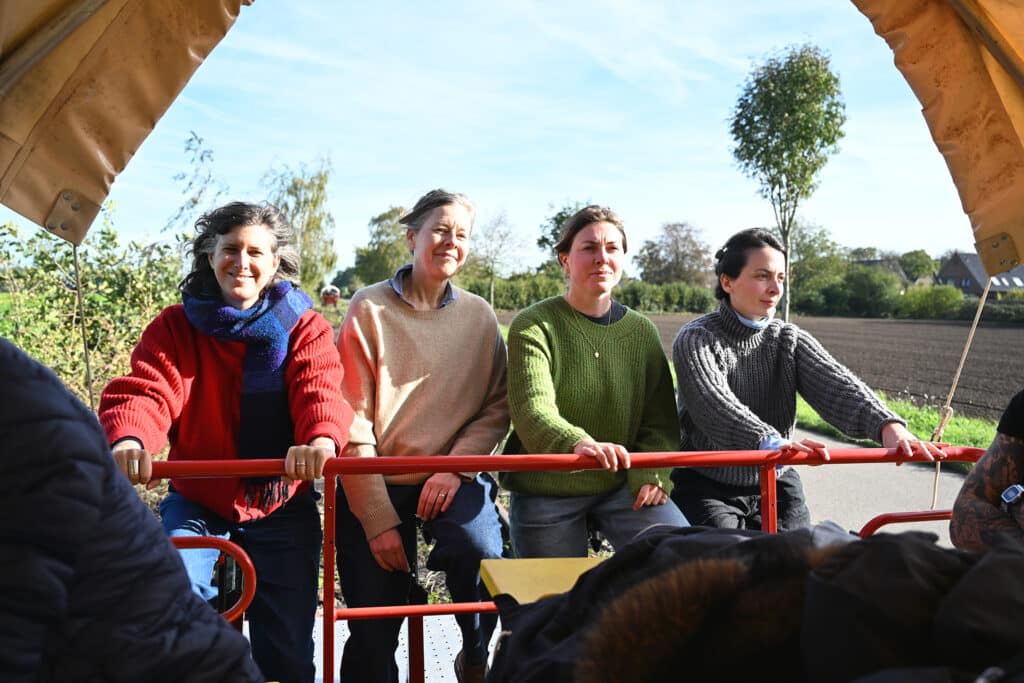
Following a day dedicated to these profound historical and existential themes, the second day offered a welcome shift toward the surrounding landscape and natural environment. After a quiet evening in Kleve, the group gathered on Thursday morning to experience the border scenery from a low-altitude, active perspective. We traveled along the historic, decommissioned railway line between Kleve and Kranenburg on the muscle-powered Grenzland-Draisine, taking in the fresh air and the unique topography of the Lower Rhine borderland. This pedal-powered journey transformed former industrial transit infrastructure into a meditative encounter with the quiet beauty of the open countryside.
Art, Birdsong, and Shared Habitats in Kranenburg
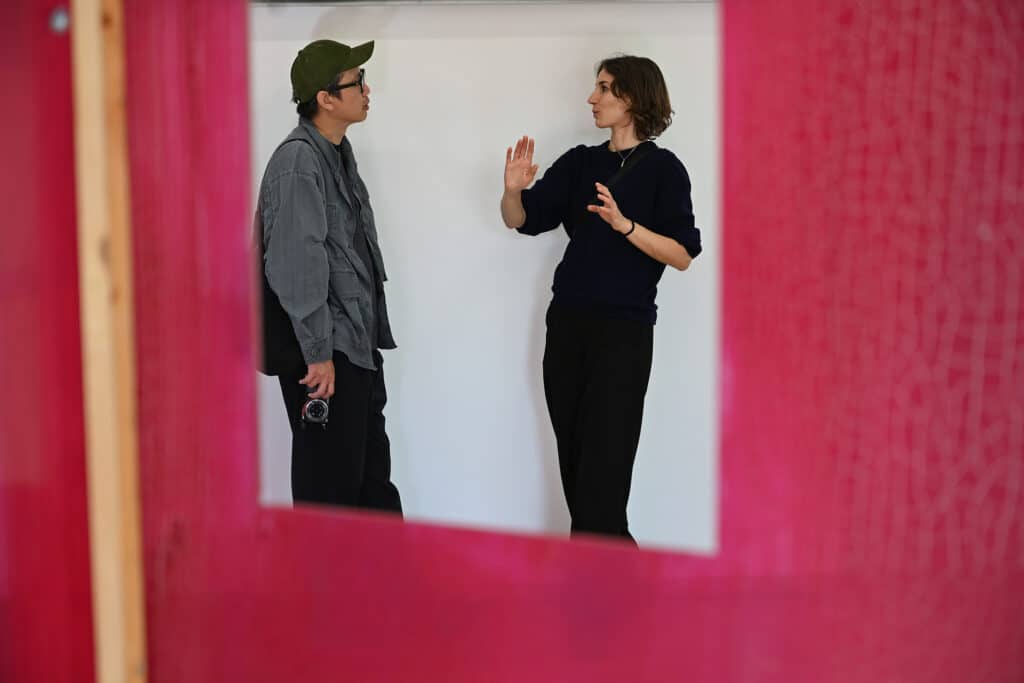
Upon arriving in Kranenburg and enjoying lunch at Caféhaus Niederrhein, Peter Schünemann, together with artists-in-residence Wiebke Meischner and Oliver Gather, guided us through the Museum Katharinenhof and the open-air exhibition Kreislauf, where the artists introduced their works dealing with birds and birdsong. Afterward, the group gathered at Projektraum Kranenburg, where Wiebke and Oliver shared insights into what they are currently developing during their residency. Together with a documentary from NABU Kleve, the session reframed the open sky not as a military domain, but as a vital European sanctuary for migratory birds, bringing our field trip to a thoughtful close.