Field Trip 1: ART & LAYERS
Unearthing Layers in the Rhenish Mining Region
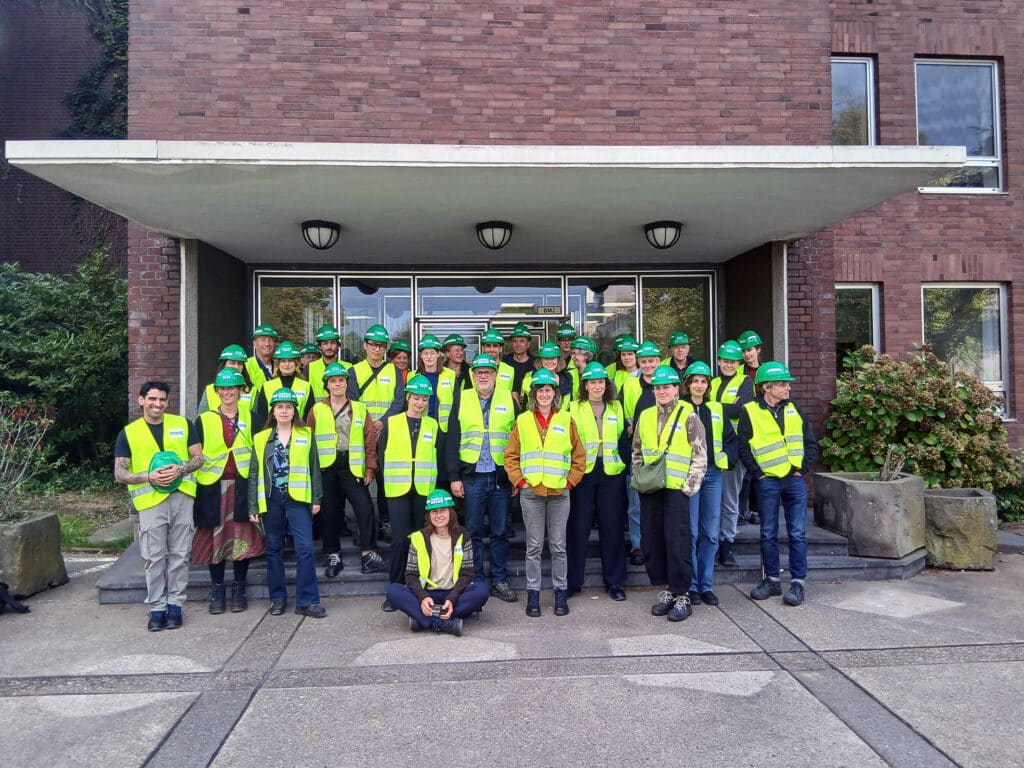
For the first field trip of the 2026/2027 cycle, Borderland Residencies took participants deep into the Rhenish lignite mining region—one of Europe’s most striking examples of how industrial interventions reshape landscapes, ecosystems, and communities. Over two days, the group explored the literal and metaphorical layers of a region in profound transition, where geology, energy production, memory, and artistic practices converge.
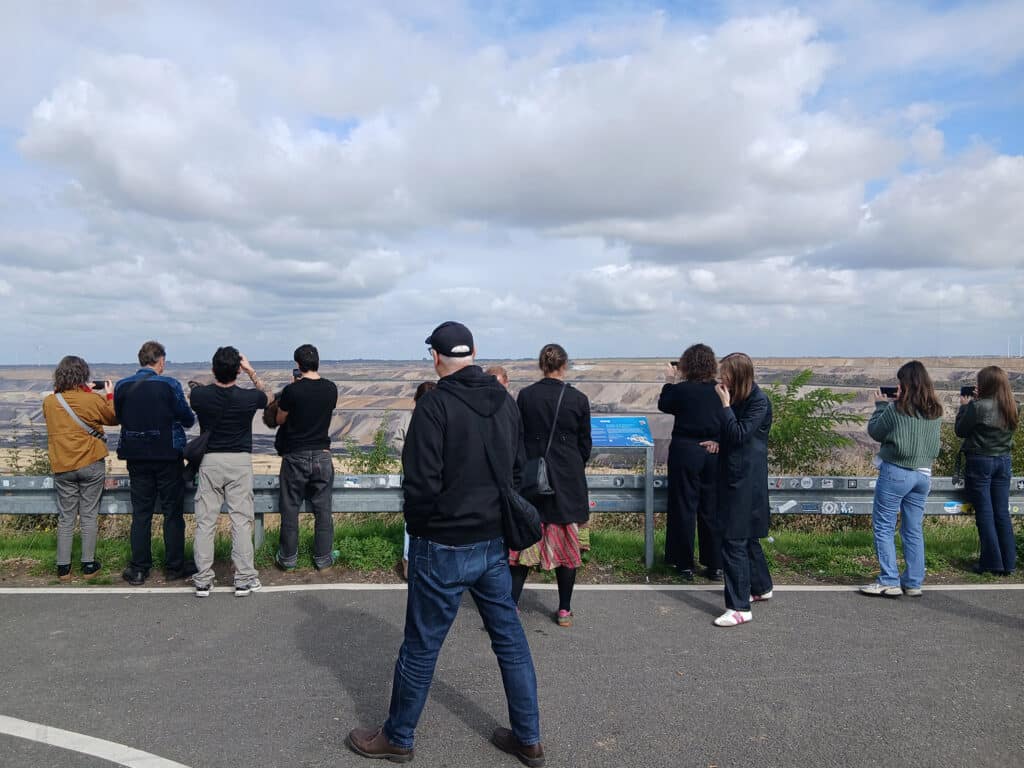
The journey began in the massive crater of the Garzweiler opencast mine. Guided by an RWE representative, the group gained insights into coal extraction and the company’s vision to transform former mining sites into future lake districts and tourist highlights. This perspective was powerfully contextualized later that evening at the Raketenstation in Neuss during a talk with Dirk Jansen from BUND (German Association for the Environment and Nature Conservation). Jansen critically examined the ecological realities, hydrologic impacts, and feasibility of these corporate plans, sparking a vibrant resonance among the artists around questions of land use, human intervention, and capital interests.
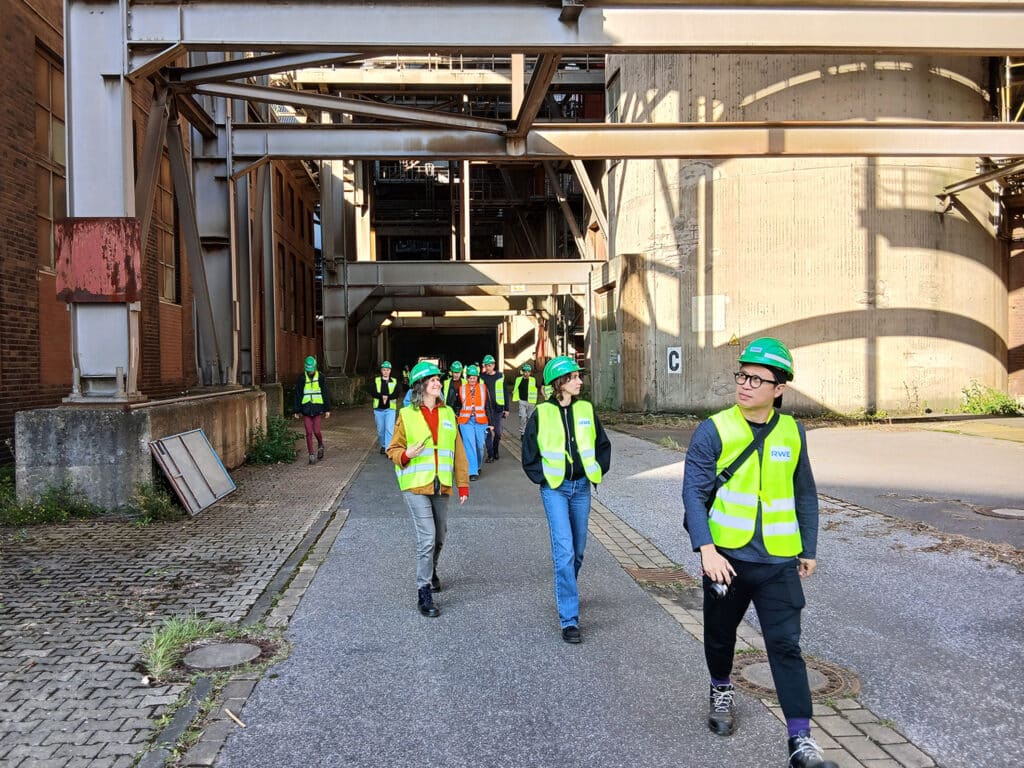
Industrial heritage met future transformation at the decommissioned Frimmersdorf power station. Equipped with hard hats and safety vests, the group was guided through the historic halls by the head of demolition. While parts of the complex are actively being dismantled, representatives from the LVR (Landschaftsverband Rheinland) presented their visionary project geSCHICHTEN Rheinisches Revier, which aims to preserve key structural elements and integrate art and culture into the site’s adaptive reuse from the ground up.
Overlapping Layers: Artistic Research and Quantum Physics at Hombroich
The second day brought a shift in scale and tempo across the peaceful grounds of the Raketenstation Hombroich—a former Cold War military site that has successfully transformed into a sanctuary for art and nature. After learning about the site’s unique architectural and artistic heritage, the group visited the studios of current Borderland artists-in-residence Anna Schütten and Judith Anna Schmidt, hosted by artist Georg Schmidt. Exploring their contemplative works, the visit culminated in an inspiring discussion with Georg Schmidt about his collaboration with theoretical physicists. His practice—bridging artistic research with quantum mechanics and the Higgs field—encouraged the group to look beyond traditional art history and embrace multi-disciplinary inquiry in their own residency projects.
This intense combination of industrial scale, ecological urgency, and artistic contemplation marked an unforgettable start to our field trip series, setting a inspiring foundation for the exchange ahead.