FIELD TRIP: ART AND MIN(D)ING

SEPTEMBER 16-17TH | Raketenstation Insel Hombroich, Tagebau Garzweiler | Hausmuseum Inge Broska, Kunstkolonnie Keyenberg | Fotos: Jan Lemitz
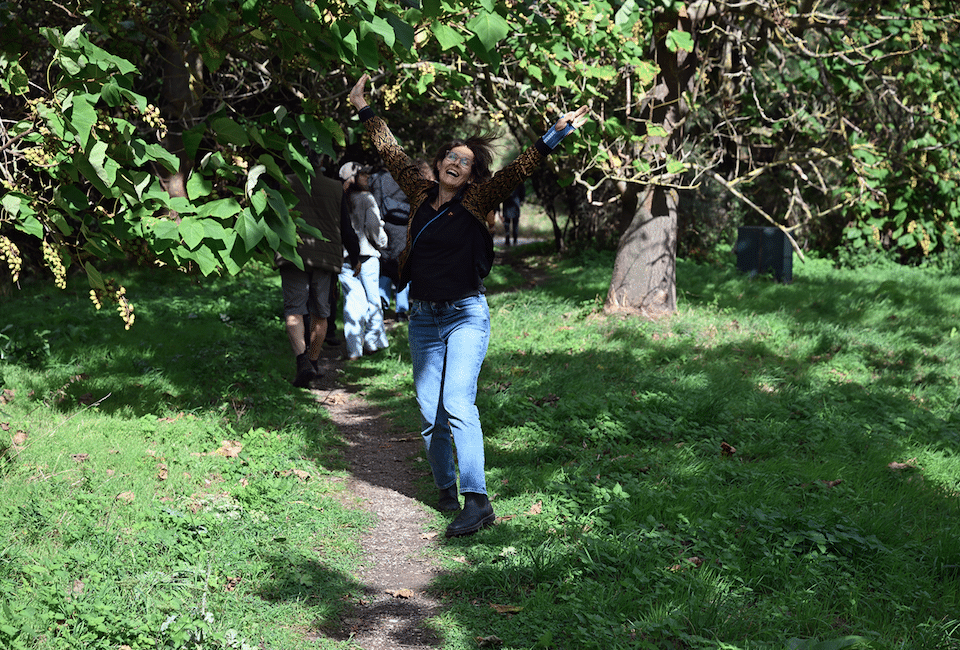
Our first field trip took us deep into the layered histories and shifting landscapes of the Rhenish lignite mining region—a place where art, activism, and industrial transformation are tightly interwoven. We began the two-day journey at Raketenstation Hombroich, where Cold War missile silos have been replaced by minimalist architecture and contemporary art. Guided by a knowledgeable host, the group explored historic locations like Raimund Abraham’s House for Musicians and the Siza Pavilion. It is a site where a military past and an artistic present quietly coexist, offering a fitting starting point for exploring the tensions between destruction and creation.
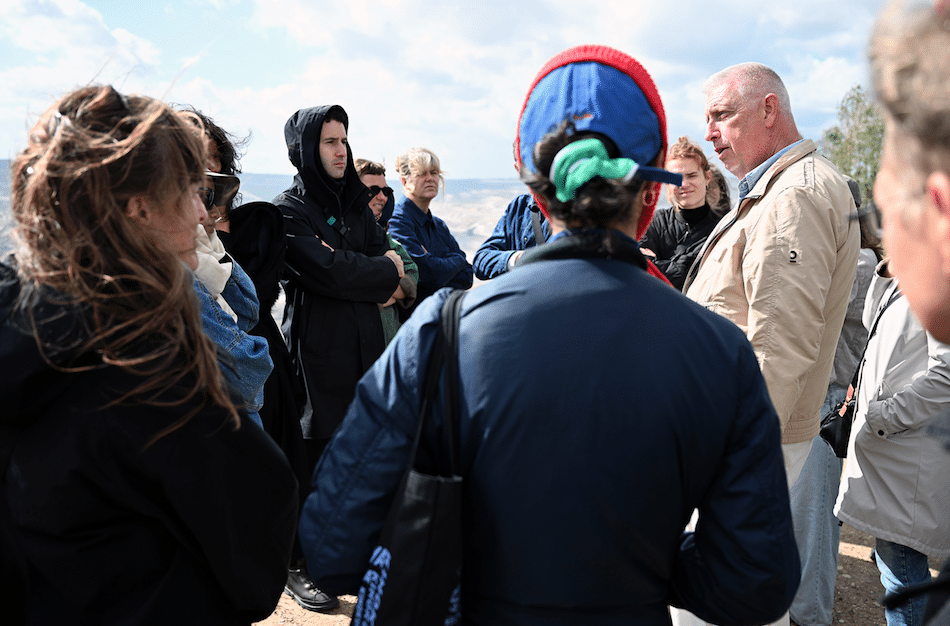
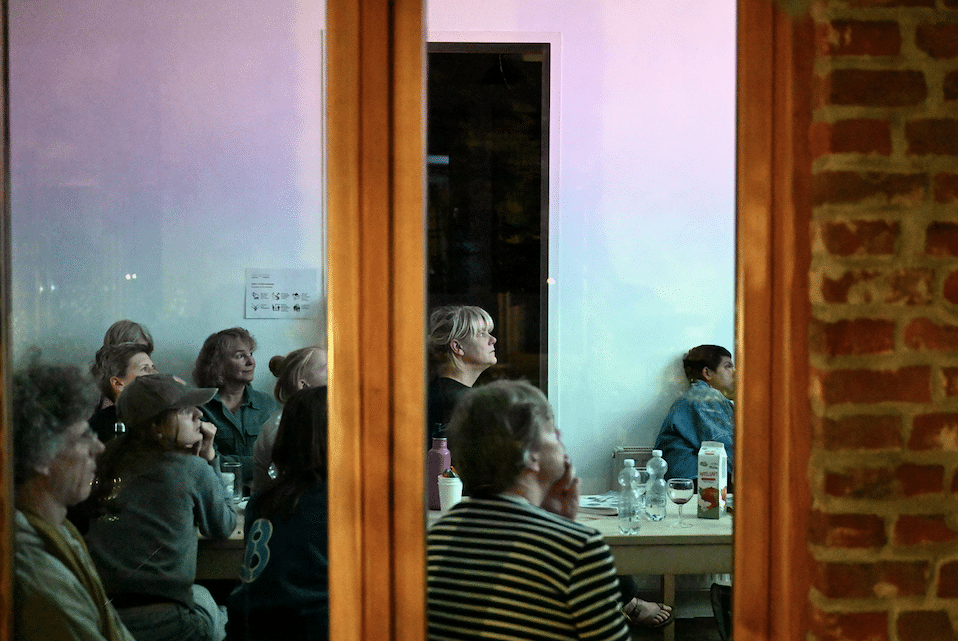
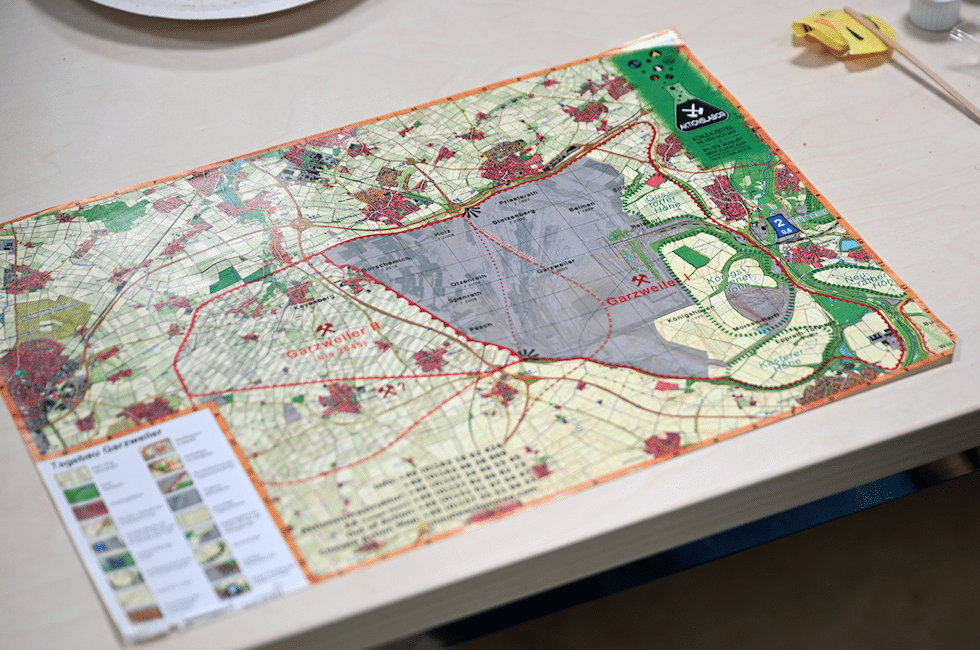
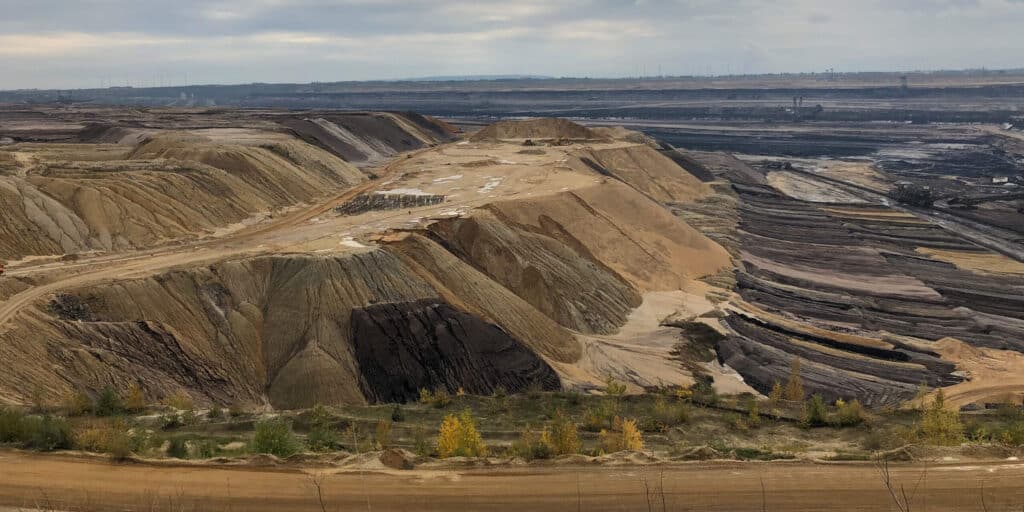
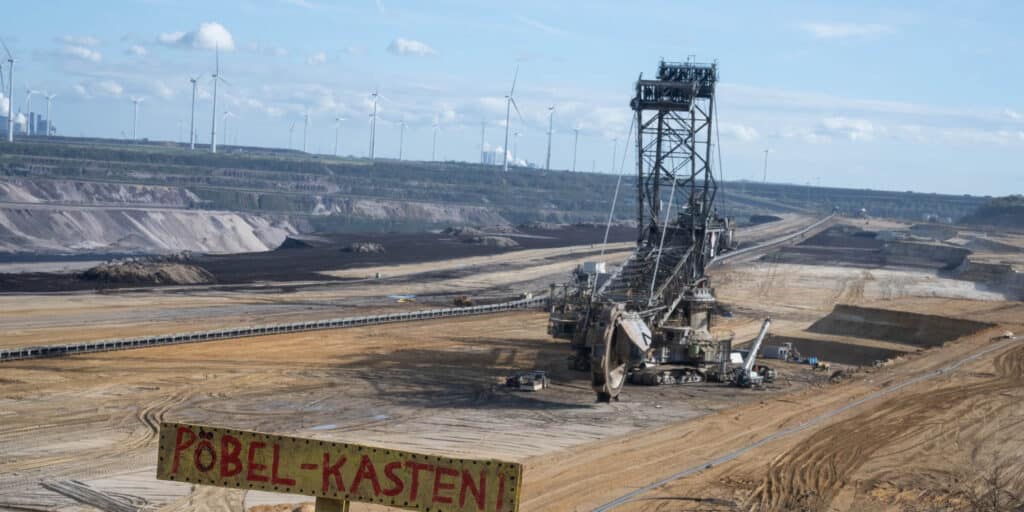
In the afternoon, we headed to the Terra Nova viewpoint at the Hambach mine. From this vantage point, we looked out over a surreal, lunar landscape: vast, empty, and unsettlingly quiet. A representative from RWE provided corporate perspectives on the scale of extraction, the engineering involved, and ongoing renaturation projects. Afterward, we visited Manheim, a district undergoing partial demolition. Artist Silke Schatz shared insights into the role of local activists and guided us to the „Sündenwäldchen“ forest edge, highlighting the emotional and social impacts of mining beyond the official narrative. The day concluded at Hombroich with stories from Inge Broska, a lifelong resident and artist, followed by a screening of SLOW VIOLENCE by Studio Lemercier, which depicts the stark destruction of nature through coal mining.
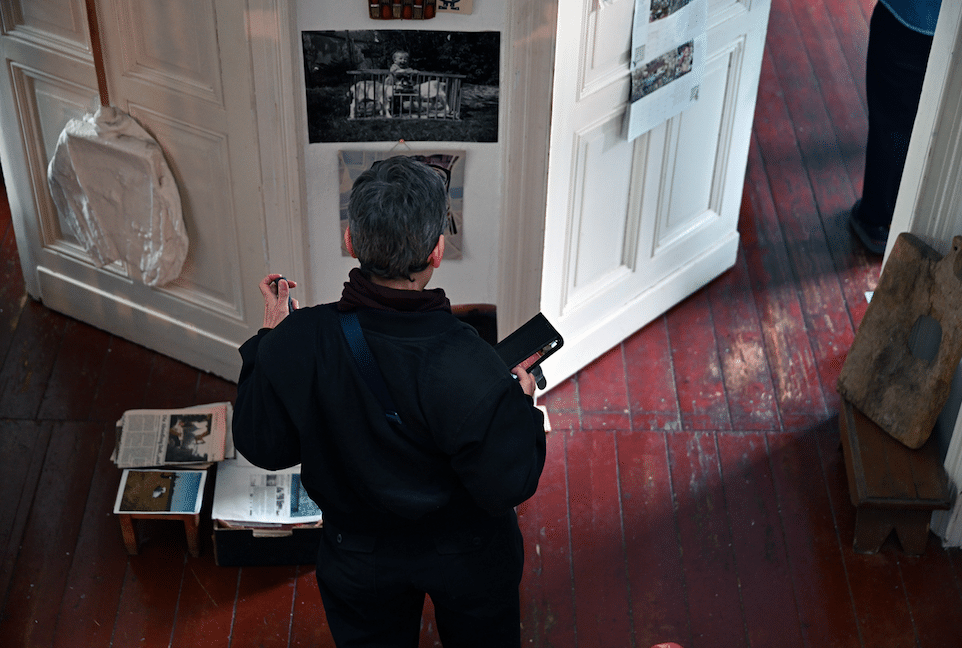
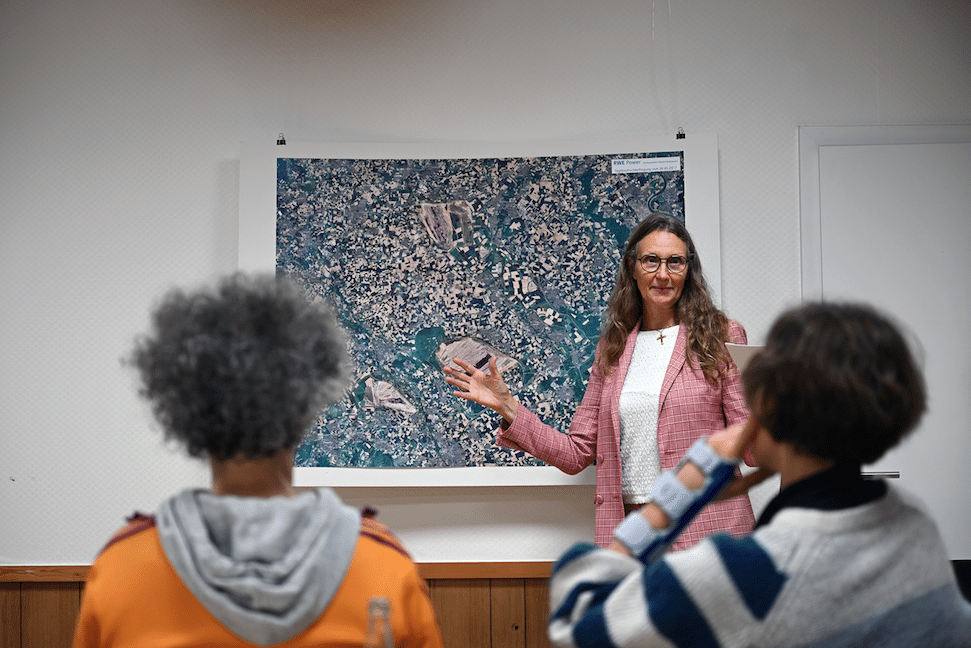
Day two began at Inge Broska’s „Hausmuseum“ in Jüchen-Hochneukirch. After her original home in Otzenrath was excavated, Broska created a personal archive of relics from destroyed localities. This unique museum gives visibility to regional resistance and the personal fates tied to the industry. From there, we traveled to Keyenberg, a village saved from demolition after 80% of its residents had already sold their homes. Though it feels like a ghost town, it remains inhabited. We met representatives of the Landfolge Garzweiler, who presented plans for a new art colony in a former farmstead designed to serve as a cultural center.
Finally, Antje Grothus—politician and environmentalist—spoke about the decades of local resistance and how a new wave of activists helped halt the mining. This sparked discussions on how to involve neglected groups in resettlement plans. The trip vividly illustrated how coal mining has sculpted both the landscape and the lives of thousands. While traces may fade, art and activism ensure that the voices and memories of the local people remain central to the region’s future development.