Field Trip: Art and Memorial
OCTOBER 6th-7th | VOGELSANG IP in Eifel National Park | MUSEUM VIEILLE MONTAGNE in Kelmis (Belgium)
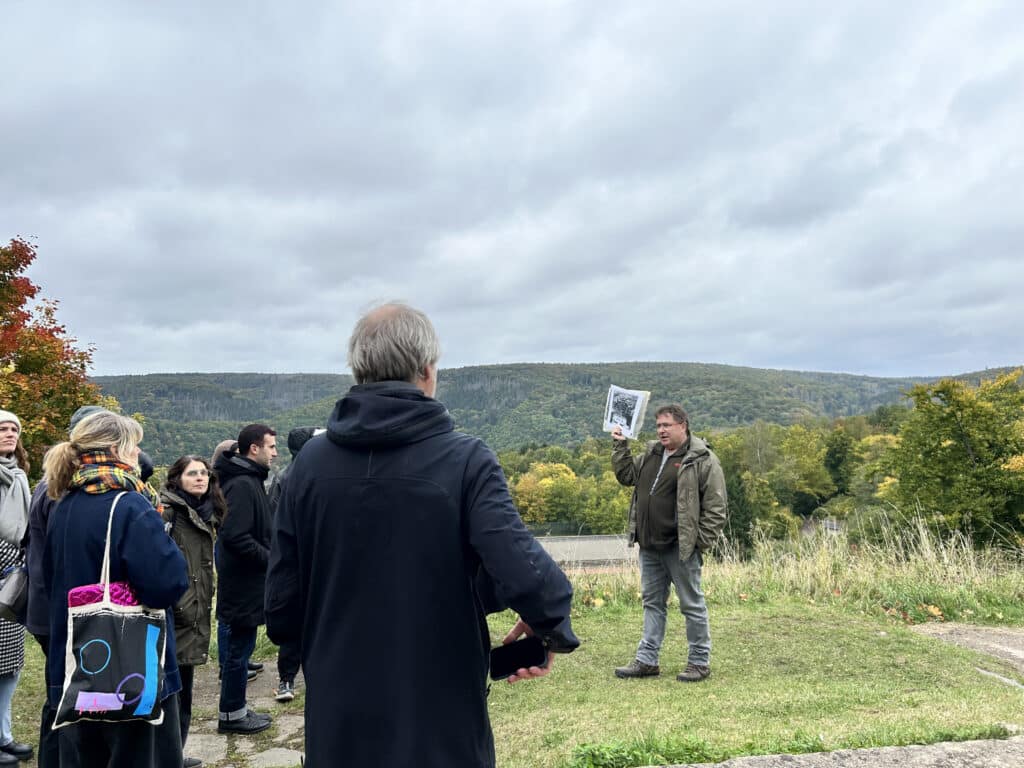
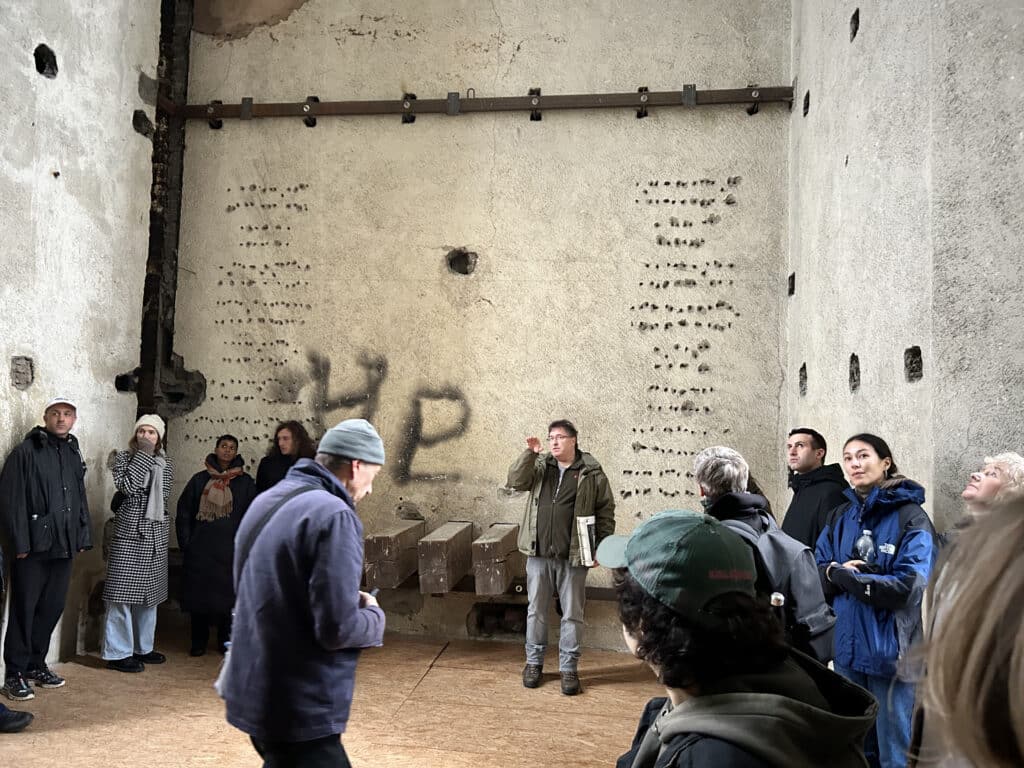
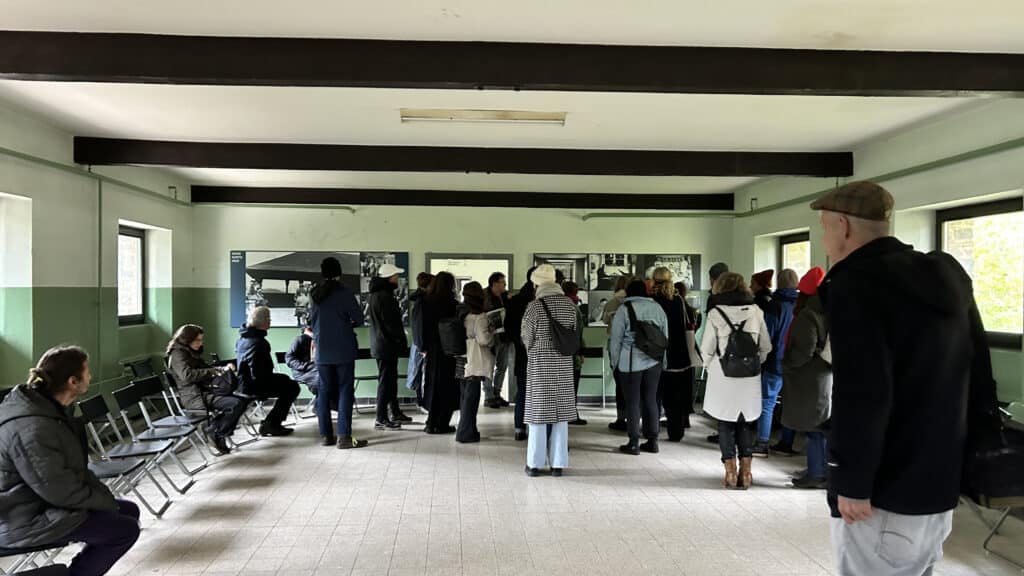
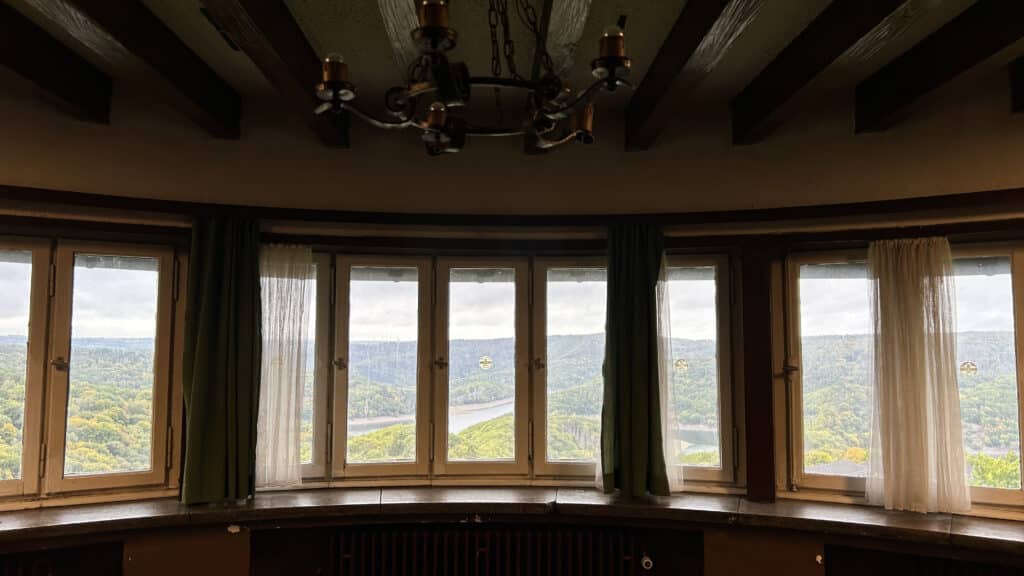
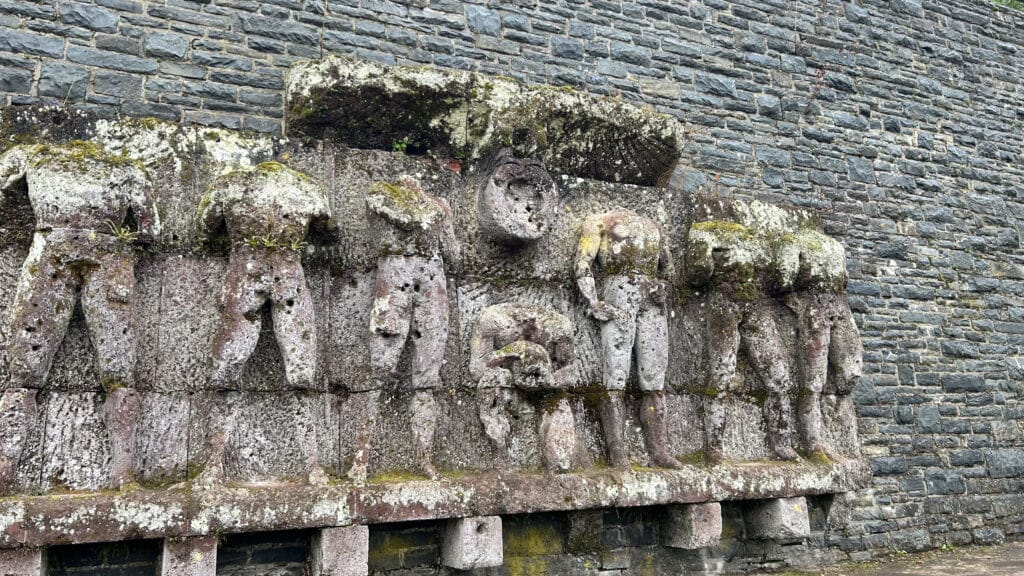
The first day of the field trip was spent at Vogelsang IP in the Eifel region, a site originally built as a Nazi Ordensburg to indoctrinate future party leaders. Its monumental architecture remains a chilling example of how space was weaponized to project the myth of the „master race.“ Following the war, the site underwent a pragmatic transformation, serving as a training ground for British and Belgian military forces until 2005. During this period, many Nazi symbols were either removed or obscured—such as the conversion of the Hall of Honor into a climbing wall. Today, the site has been successfully repurposed as a center for education and remembrance. Led by scientific director Stefan Wunsch, the group explored the grounds and the permanent exhibition, „Destiny: Master Race,“ which encourages visitors to reflect on the past and its relevance to modern social issues. Notable highlights of the tour included the Adlerhof complex, a former seminar room housing the Ehrenhalle (Hall of Honor), and various rooms not usually open to the general public, such as the Burgschänke. We also caught glimpses of the torchbearer relief, the Sonnwendplatz, various sports facilities, and the open-air stage, all of which continue to echo the period’s aggressive claim to power and its eventual tactical uses.
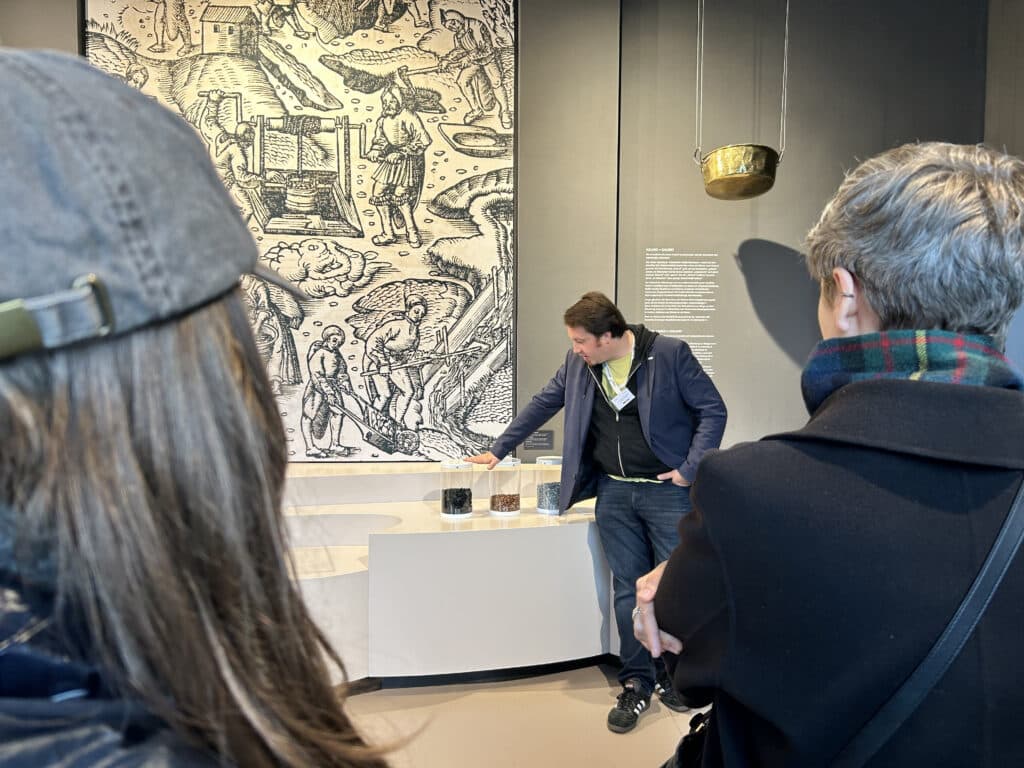
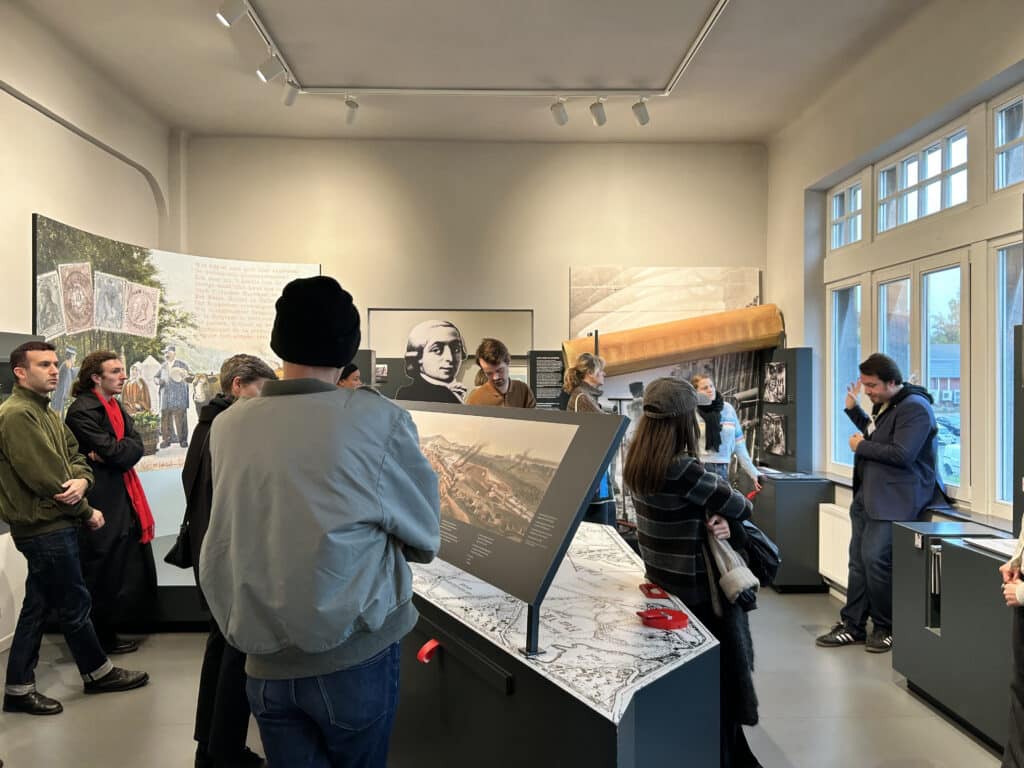
On the second day, the group crossed into Kelmis, East Belgium, a town defined by its industrial history and the unique political phenomenon of Neutral-Moresnet. Between 1816 and 1918, this area existed as a neutral territory due to its valuable zinc ore deposits. At the Vieille Montagne Museum, housed in a historic Art Nouveau headquarters, museum director Jan Cetinkaya guided the group through the history of zinc mining and its profound impact on local identity. By linking industrial heritage with cross-border cooperation, the museum illustrates how the region’s past continues to shape its present.
Together, both sites demonstrated how locations with complex or dark histories can be transformed into vital spaces for dialogue, learning, and European cooperation.