DAY TRIPS I:
STUDIO VISITS


pictures: Nathalie Schulz
Date
October 29th-30th
Sammlung Philara, Düsseldorf
a271, Ateliers Höherweg, Düsseldorf
Weltkunstzimmer, Düsseldorf
Het Nieuwe Domein, Sittart
Viewmaster Projects, Maastricht
In addition to large-scale field trips, the Borderland Residencies program also includes day trips. These trips take us to the residency locations or nearby places that are part of the artistic network and play a key role in the local art scene. As a result, we found ourselves in Düsseldorf on 29 October and in Sittard and Maastricht the next day.


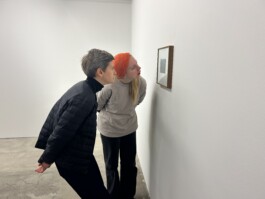
First, the group visited the renowned Sammlung Philara. Located in a former industrial area in Flingern, it houses an impressive private museum of contemporary art. It was founded by art collector and real estate developer Gil Bronner and covers an area of approximately 1,700 square meters. In addition to the permanent exhibition, there are annually changing presentations and several temporary exhibitions per year.
Borderland Residencies and the Sammlung Philara share a common history: In 2024, we jointly presented the exhibition SEEKING SOIL with BR artists Tini Aliman, Wim Bosch, Cristiana Cott Negoescu, David Hahlbrock, Salomé Ingelbrecht, Zhixin Angus Liao, Darcy Neven, Nico Pachali, Silke Schatz, Rosa Vrij, Finn Wagner, and Marit Westerhuis, curated and organized by the philara collection team.
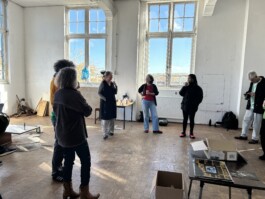
For the days trip, curator and director Julika Bosch welcomed us and gave us an introduction. Then, curator Hannah Niemeier gave us a tour of one of the current exhibitions: To mark the 150th anniversary of the former Lennarz glazier's workshop, the Sammlung Philara, which has been based in the converted premises since 2016 (and whose caretaker still worked in the glazier's workshop), is presenting a comprehensive exhibition on glass in contemporary art. The presentation explores the compatibility of structure and chaos, as well as other contrasts that this versatile material embodies, and focuses on interdisciplinarity, collectivity, and international collaboration—all characteristics of glass and its production.


Our second stop was the Ateliers Höherweg in Düsseldorf, also known as a271, an artists' collective and studio building in the Lierenfeld district that has been in existence since 1994. Founded by local artists such as Klaus Richter, Sybille Berke and Jan Kolata, the studio building was created in a former industrial and administrative building belonging to the Rheinisch-Westfälische Stahlindustrie. It offers 14 artists their own studios with high ceilings and plenty of light, as well as a guest apartment for international artists who can stay for two to six months. This self-managed artist community is responsible for its own operation, maintenance, and the allocation of guest studios, and sees itself as a lively platform for exchange between local and international artists.The studio community celebrated its 30th anniversary in 2024 and regularly opens its doors for exhibitions and events showcasing the works of resident and invited artists.
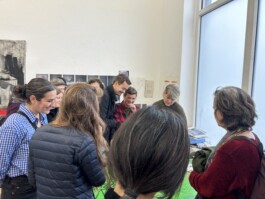
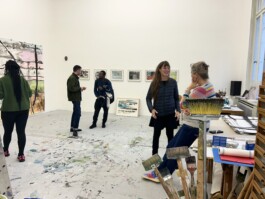
Currently, BR artists Tamar Oosterhof and Taha Afefe are in residence there. Tamar showed us her studio and the paintings she is currently working on. She explained the background, which is deeply linked to her upbringing in Israel and her awareness of borders, separation and indoctrinated fear. Taha, who is Palestinian but has an Israeli passport, arrived shortly before our visit to the studio. The two work closely together and are making intensive use of their time in Düsseldorf and explore the pressing issues of their homeland from afar.


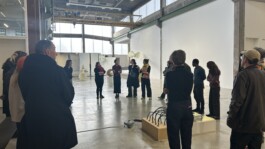
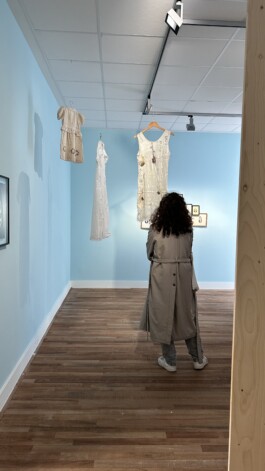
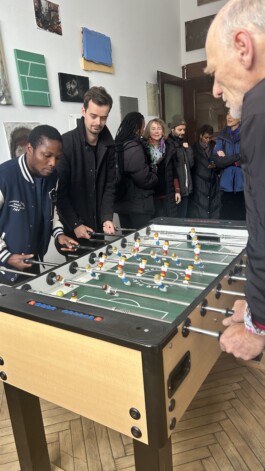
Our last stop that day was the Weltkunstzimmer in Düsseldorf, an interdisciplinary art center run by the Hans Peter Zimmer Foundation and located in a former bakery at Ronsdorfer Straße 77a in Flingern. The building offers over 10,000 square meters of space for exhibitions, performances, concerts, dance, theater, film, and music. It is a place that has grown out of the local subculture, promotes diverse creative projects and collaborations, and serves as a refuge for artistic experimentation and encounters. The architecture and spirit of the place reflect the goal of understanding and supporting art as a social process. The program regularly organizes exhibitions and events, including the Weltkunstzimmer Residency for international and local guest artists. BR artists Narek Arushanyan and Shilpa Nayudu are part of this residency program and presented their artistic projects at Weltkunstzimmer. Arushanyan brings an international perspective from Armenia and organized an collaborative exhibition entitled "The Tongue of Birds", while Shilpa works with an interdisciplinary approach between visual arts, performance, and social discourse. The residency not only enables both artists to work in a studio, but also to exchange ideas with other creative people and present their works and ideas to the public. The two gave us a short tour of their currently exhibited works, and Shilpa involved the group in her participatory work “Slow Stitch Circle.”
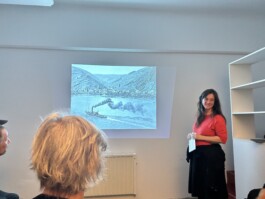
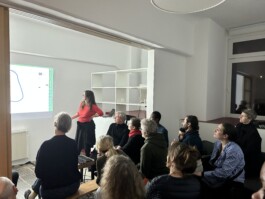
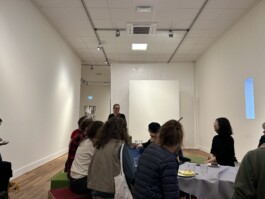
After preparing and enjoying dinner together in the guest rooms of the Weltkunstzimmer, we moved on to the next presentation. Margit Lukács & Persijn Broersen shared their research on the Rhine River with us and showed us the project they are working on during their residency: an AI-Rhine Myth generator.


The next day the group went to Sittard, to visit BR artist Helena in her studio. She is a guest artist at Het Nieuwe Domein. Her project “The Great Misunderstanding” takes an interdisciplinary approach to misunderstandings in communication and interpersonal relationships. She combines artistic media and social themes to enable new perceptions and insights.
At Helena's studio, we also had the opportunity to meet curator Alice Smith from Zone2Source, who spoke about her approach to interspecies coexistence and public space.
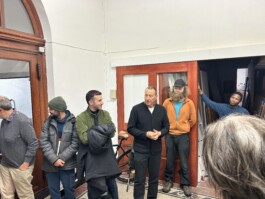
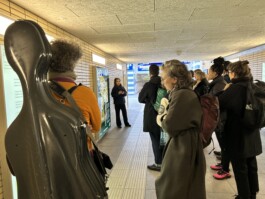
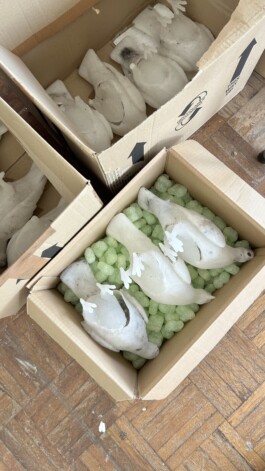
As a group, we then made our way to Sittard train station, where Helena presented her work on pigeon-human-landscapes.
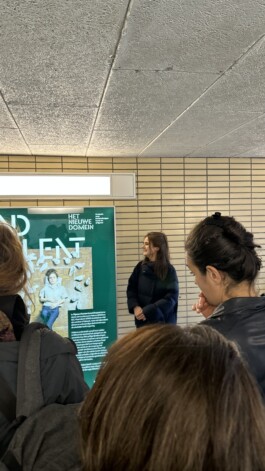
Immediately afterwards, we went to her residency place: The Museum Het Nieuwe Domein (HND) in Sittard. It is a museum for contemporary art and cultural heritage that combines history and the present in an innovative way. It presents radical perspectives in which regional stories and global themes are brought together through art and cultural heritage. The museum sees itself as an open, sensitive forum that is open to social issues and multiple voices.
After a quick snack, we were welcomed by curator Majorlein van der Loo and general and artistic director Mijke Harst. They gave us the opportunity to preview the upcoming collection presentation.
Both days provided only a small glimpse into the different locations that are part of the Borderland Network. However, they demonstrated the wide range of opportunities that arise there and how much the location of the residency can influence artistic practice.
DAY TRIPS I:
STUDIO VISITS


pictures: Nathalie Schulz
Date
October 29th-30th
Sammlung Philara, Düsseldorf
a271, Ateliers Höherweg, Düsseldorf
Weltkunstzimmer, Düsseldorf
Het Nieuwe Domein, Sittart
Viewmaster Projects, Maastricht
In addition to large-scale field trips, the Borderland Residencies program also includes day trips. These trips take us to the residency locations or nearby places that are part of the artistic network and play a key role in the local art scene. As a result, we found ourselves in Düsseldorf on 29 October and in Sittard and Maastricht the next day.

at Sammlung Philara. Photos: Nathalie Schulz

First, the group visited the renowned Sammlung Philara. Located in a former industrial area in Flingern, it houses an impressive private museum of contemporary art. It was founded by art collector and real estate developer Gil Bronner and covers an area of approximately 1,700 square meters. In addition to the permanent exhibition, there are annually changing presentations and several temporary exhibitions per year.
Borderland Residencies and the Sammlung Philara share a common history: In 2024, we jointly presented the exhibition SEEKING SOIL with BR artists Tini Aliman, Wim Bosch, Cristiana Cott Negoescu, David Hahlbrock, Salomé Ingelbrecht, Zhixin Angus Liao, Darcy Neven, Nico Pachali, Silke Schatz, Rosa Vrij, Finn Wagner, and Marit Westerhuis, curated and organized by the philara collection team.
For the days trip, curator and director Julika Bosch welcomed us and gave us an introduction. Then, curator Hannah Niemeier gave us a tour of one of the current exhibitions: To mark the 150th anniversary of the former Lennarz glazier's workshop, the Sammlung Philara, which has been based in the converted premises since 2016 (and whose caretaker still worked in the glazier's workshop), is presenting a comprehensive exhibition on glass in contemporary art. The presentation explores the compatibility of structure and chaos, as well as other contrasts that this versatile material embodies, and focuses on interdisciplinarity, collectivity, and international collaboration—all characteristics of glass and its production.


Our second stop was the Ateliers Höherweg in Düsseldorf, also known as a271, an artists' collective and studio building in the Lierenfeld district that has been in existence since 1994. Founded by local artists such as Klaus Richter, Sybille Berke and Jan Kolata, the studio building was created in a former industrial and administrative building belonging to the Rheinisch-Westfälische Stahlindustrie. It offers 14 artists their own studios with high ceilings and plenty of light, as well as a guest apartment for international artists who can stay for two to six months. This self-managed artist community is responsible for its own operation, maintenance, and the allocation of guest studios, and sees itself as a lively platform for exchange between local and international artists.The studio community celebrated its 30th anniversary in 2024 and regularly opens its doors for exhibitions and events showcasing the works of resident and invited artists.
Currently, BR artists Tamar Oosterhof and Taha Afefe are in residence there. Tamar showed us her studio and the paintings she is currently working on. She explained the background, which is deeply linked to her upbringing in Israel and her awareness of borders, separation and indoctrinated fear. Taha, who is Palestinian but has an Israeli passport, arrived shortly before our visit to the studio. The two work closely together and are making intensive use of their time in Düsseldorf and explore the pressing issues of their homeland from afar.


Our last stop that day was the Weltkunstzimmer in Düsseldorf, an interdisciplinary art center run by the Hans Peter Zimmer Foundation and located in a former bakery at Ronsdorfer Straße 77a in Flingern. The building offers over 10,000 square meters of space for exhibitions, performances, concerts, dance, theater, film, and music. It is a place that has grown out of the local subculture, promotes diverse creative projects and collaborations, and serves as a refuge for artistic experimentation and encounters. The architecture and spirit of the place reflect the goal of understanding and supporting art as a social process. The program regularly organizes exhibitions and events, including the Weltkunstzimmer Residency for international and local guest artists. BR artists Narek Arushanyan and Shilpa Nayudu are part of this residency program and presented their artistic projects at Weltkunstzimmer. Arushanyan brings an international perspective from Armenia and organized an collaborative exhibition entitled "The Tongue of Birds", while Shilpa works with an interdisciplinary approach between visual arts, performance, and social discourse. The residency not only enables both artists to work in a studio, but also to exchange ideas with other creative people and present their works and ideas to the public. The two gave us a short tour of their currently exhibited works, and Shilpa involved the group in her participatory work “Slow Stitch Circle.”
After preparing and enjoying dinner together in the guest rooms of the Weltkunstzimmer, we moved on to the next presentation. Margit Lukács & Persijn Broersen shared their research on the Rhine River with us and showed us the project they are working on during their residency: an AI-Rhine Myth generator.